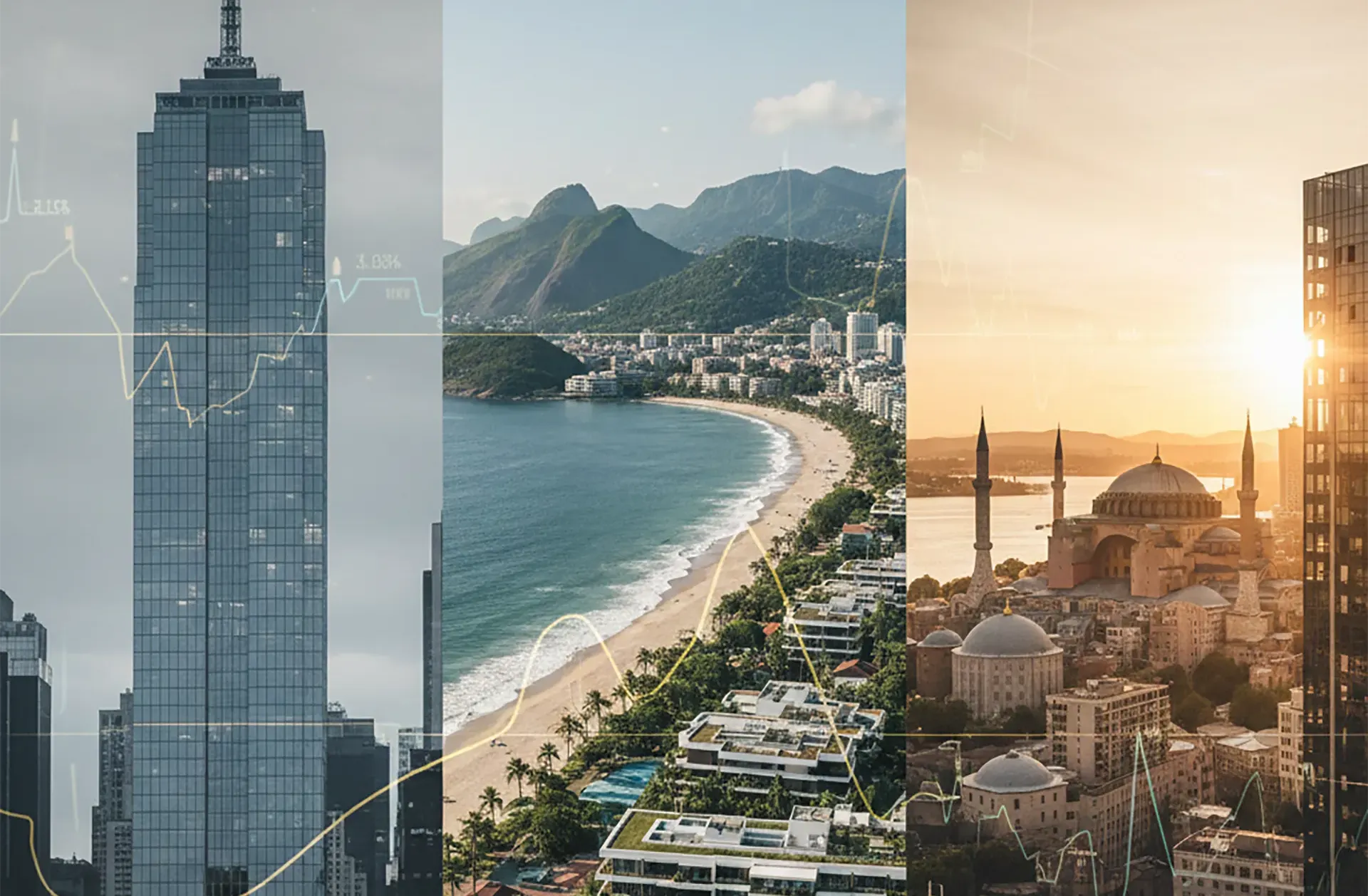




The real estate landscape in 2025 is defined by divergent regional dynamics: the U.S. market remains subdued under high interest rates, Brazil enjoys demand-driven expansion and Turkey is stabilising after inflationary surges. Understanding these nuances helps global investors align capital with local market cycles.
U.S. housing in 2025 is characterized by historically low inventory and demand. Researchers at J.P. Morgan note that the market is “likely to remain largely frozen” with growth capped around 3 %. Existing home sales and inventories remain below long-term averages, and elevated mortgage rates, forecast to remain near 6.7 %, continue to suppress buyer activity. Supply is constrained not only by under-building but by the “lock-in effect,” as over 80 % of borrowers hold low-rate mortgages and have little incentive to sell. These conditions mean that multi-family construction is also slowing.
Readers interested in the policy dimension can explore Monetary Policy and Real Estate, for a deeper look at rate cycles.
Brazil stands in stark contrast. The residential market experienced an 18.6 % increase in new developments and a 20.9 % rise in sales in 2024, momentum that carried into 2025 on the back of subsidized credit under programmes such as Minha Casa, Minha Vida. High-end office demand and logistics built-to-suit structures also gained traction. Nevertheless, Brazil faces macroeconomic headwinds: interest rates remain elevated and a sweeping tax reform (Statute No 214/2025) introduces a goods-and-services tax (IBS/CBS) beginning in 2026, raising concerns about higher tax burdens. Foreign investors should monitor currency volatility and policy stability while considering opportunities in urban regeneration, infrastructure-linked developments and securitised real estate instruments.
A deeper dive into legal frameworks appears in Housing Affordability and Policy in Portugal: Balancing Growth and Social Needs.
Turkey’s real estate sector in 2025 is transitioning from inflation-driven price spikes to stabilised growth. A comprehensive review from Homes of Turkey notes that the market is entering a new cycle shaped by foreign investment, economic stabilisation and demand in cities such as Istanbul, Antalya and Bodrum. Key factors include central-bank policies aimed at curbing inflation, rising demand for earthquake-resistant developments and a shift from speculative buying to long-term investment. Nationwide price growth is expected to range between 10 % and 18 % in 2025, moderating to 8 %–14 % in 2026.
Foreign buyers remain active due to a USD 400 k citizenship threshold and seek earthquake-safe properties with high rental yields. Istanbul leads in liquidity, Antalya benefits from tourism-driven demand and Bodrum and Izmir attract long-term residential investors.
For global investors, the divergence across these markets underscores the need for localized strategies. U.S. opportunities may lie in selective distress or multifamily conversions, Brazil offers growth in logistics and affordable housing programmes and Turkey rewards investors who prioritise quality construction and resilient locations. Pagani Capital can combine these insights with its expertise in Portuguese real estate and private equity to craft diversified portfolios that balance yield, liquidity and risk.
For further exploration of liquidity and fund structures, see Convertible Bond Funds and Golden Visa and Open vs Closed Funds.